

Iron bacteria are the leading cause of bore pump failure across the Hunter Valley. If your bore water smells like rotten eggs, runs orange, or your pump is losing pressure, iron bacteria are almost certainly to blame. Treat early with a biodegradable bore cleaner like Clearbore and stop the damage before it becomes a costly pump replacement.
Across the Hunter Valley — from the vineyards of Pokolbin and Cessnock to the grazing properties of Singleton and Muswellbrook — groundwater drawn from private bores is critical to daily operations. Whether you irrigate vines, water livestock, or rely on bore water at home, a clean, high-performing bore is not a luxury. It is a baseline.

The Hunter Valley’s geology creates near-ideal conditions for iron bacteria. These microscopic organisms feed on dissolved iron in groundwater. They form dense, rust-coloured slimes inside bore casings, pump chambers, and distribution pipes. Once established, they restrict flow, corrode metal components, and — left untreated — shorten the life of pump equipment considerably.
This guide explains why iron bacteria thrive here, how to identify an infestation, and what a proper treatment looks like. If you are already dealing with discoloured water, a sulphur smell, or a pump losing pressure, the treatment section will tell you exactly what to do.
Why Hunter Valley Bores Are Particularly Vulnerable
The Hunter Valley sits above extensive sedimentary formations — sandstones, siltstones, and alluvial aquifers — that naturally contain elevated concentrations of soluble iron. Groundwater moves through these iron-rich layers and carries dissolved iron to the surface when pumped. That alone is manageable. The real problem starts when iron-oxidising bacteria colonise the bore.
Iron bacteria — most commonly Gallionella, Leptothrix, and Sphaerotilus species — thrive wherever dissolved iron meets oxygen. That transition zone occurs at the bore screen, the pump intake, and throughout the distribution system. Many Hunter Valley bores draw from shallow alluvial aquifers along the Hunter and Paterson Rivers. Iron concentrations there are high and water tables fluctuate seasonally. Drawdown during dry summers exposes more of the bore screen to air, creating a perfect oxidation environment.
Properties in Maitland, Cessnock, Muswellbrook, and the Upper Hunter frequently report recurring iron problems. The aquifer conditions keep recharging the iron load. Treating the symptom — discoloured water — without addressing the bacterial colony inside the bore is a temporary fix at best.
How to Recognise Iron Bacteria in Your Bore
Visual and sensory warning signs
The most obvious sign is rust-brown or orange water, particularly when a tap is first opened after the pump has been idle overnight.
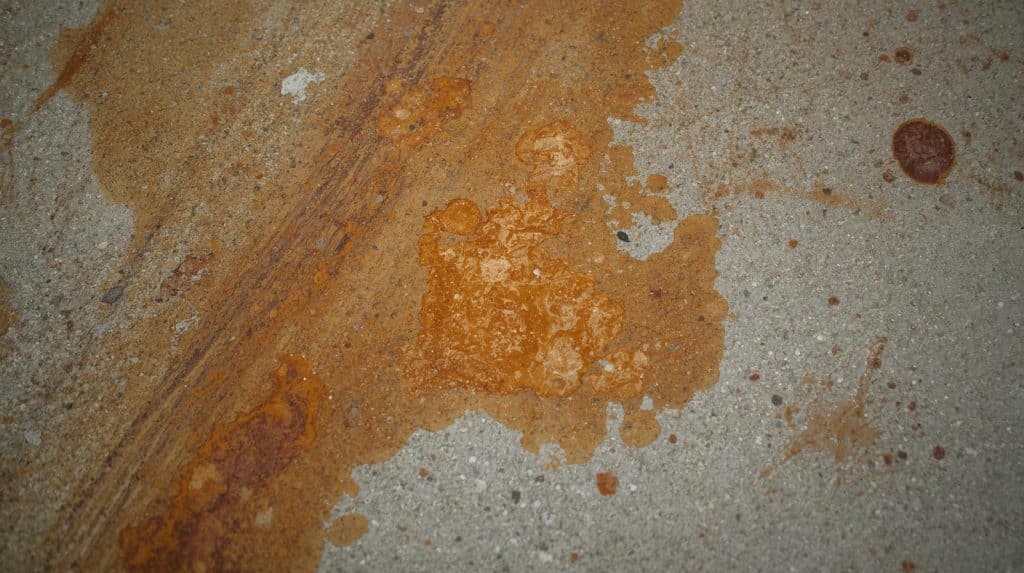
Slime on screens and fittings: a reddish, gelatinous coating inside header tanks, irrigation filters, and sprinkler heads is a reliable indicator of active iron bacteria.
Sulphur or ‘rotten egg’ odour: iron bacteria create anaerobic pockets where sulphate-reducing bacteria also establish. The hydrogen sulphide they produce is unpleasant and a clear signal of biological activity.
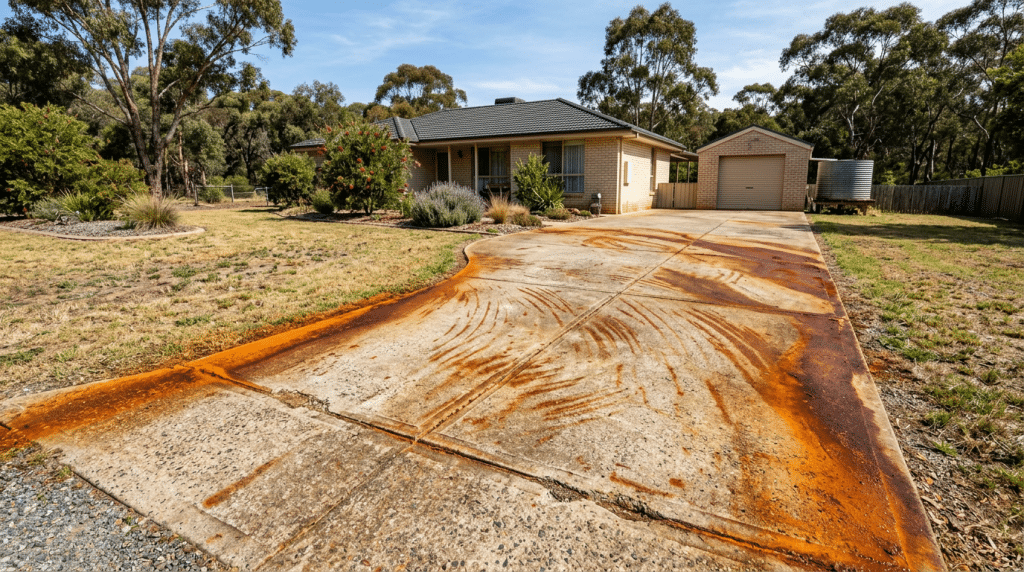
Staining on surfaces: orange or brown deposits on concrete, pavers, irrigation lines, and steel fittings indicate iron-rich water is reaching your distribution system. X-Fe and X-Fe Forte remove these stains from non-porous and porous surfaces respectively.
Performance warning signs
Reduced pump output is often the first performance signal. Iron bacteria build up on the bore screen and inside the pump casing. They physically block the slots and reduce the volume of water the pump can draw. A bore delivering 3,000 litres per hour may gradually drop to 2,000 without any mechanical failure — simply because the screen has been progressively clogged.
If your pressure tank is cycling more frequently, system pressure is dropping, or the pump is running hotter than usual, schedule a professional inspection. Do not wait for total failure.
Diagnosing the Problem Before You Treat
Before committing to a treatment programme, confirm the source of the problem. A basic water test from a NATA-accredited laboratory will measure total iron, ferrous iron, pH, turbidity, and total dissolved solids. In the Hunter Valley, total iron readings above 0.3 mg/L are common in untreated bore water. While above the Australian Drinking Water Guidelines aesthetic threshold, they are entirely treatable. Readings above 5 mg/L indicate a significant iron load requiring a thorough bore clean before conditions improve.
A simple field test is also useful. Collect bore water in a clean white bucket and leave it in sunlight for 30 minutes. If a rusty film forms on the surface or slime precipitates to the bottom, iron bacteria are actively present. This does not replace laboratory analysis, but it gives you an immediate indication of the problem.
For properties where iron staining is appearing on drip irrigation lines or vineyard trellis infrastructure, the infestation is typically well established. A more intensive treatment approach will be needed.
Treating Iron Bacteria: The Clearbore Method
Clearbore is an Australian-made, biodegradable bore cleaning product. It is specifically formulated to dissolve iron oxide deposits, disrupt iron bacteria biofilms, and restore bore screen open area. It has been used successfully on Hunter Valley bores for more than 30 years and is safe for the aquifer, downstream vegetation, and livestock.
Treatment overview
Treatment involves introducing a measured dose into the bore casing, allowing it to work over a specified contact period, then pumping the bore to waste until the effluent clears. Dosage depends on bore depth, casing diameter, and the severity of build-up. For heavily fouled bores — particularly on Hunter Valley vineyards running hard through summer — a two-stage treatment is often more effective. An initial cleaning dose is followed by a secondary dose after a short interval.
Surge pumping during the treatment period drives the cleaning solution into the screen slots and gravel pack. It reaches bacterial colonies established outside the immediate casing. This step is often overlooked but makes a measurable difference to how completely the screen is cleared.
What to expect after treatment
A successful treatment delivers restored pump flow, reduced iron readings, elimination of the sulphur odour, and a measurable drop in iron staining on distribution infrastructure. Where the bore screen has been significantly blocked, pump output can improve by 30–50% following proper treatment and rehabilitation.
Treatment is not a permanent one-time solution. Iron bacteria can recolonise from the surrounding aquifer, particularly after flood events that disturb the water table. A maintenance programme — annual for high-use agricultural bores, biennial for lower-use residential bores — is the most cost-effective way to keep pump performance consistent and avoid emergency replacements.
Seasonal Considerations for Hunter Valley Bore Owners
The Hunter Valley’s climate creates distinct seasonal risk windows. Late summer and early autumn — typically February through April — represent the highest-risk period. Extended heat, elevated pumping demand for vineyard irrigation, and low water-table conditions combine to accelerate bacterial growth. Bores performing adequately in spring may show noticeable deterioration by March.
The period following significant rainfall can also trigger problems. Flood recharge events along the Hunter River floodplain introduce fresh organic material and iron into the aquifer. This nutrient influx can cause rapid bacterial blooms in bores that were previously clean. Properties in low-lying areas around Maitland, Raymond Terrace, and the Lower Hunter flats should monitor water quality closely in the weeks after major flood events.
Scheduling bore maintenance in late winter — typically July or August — puts the bore in optimum condition before the high-demand growing season. Many Hunter Valley irrigation managers already use this approach. It consistently delivers better outcomes than reactive treatment during peak summer.
Removing Iron Rust Stains From Surfaces
Iron bacteria and iron-rich bore water leave distinctive orange-brown stains on contacted surfaces. On concrete, pavers, sandstone, and brick — common on rural Hunter Valley properties — these stains resist ordinary cleaning products. They are iron oxide deposits, not surface dirt.
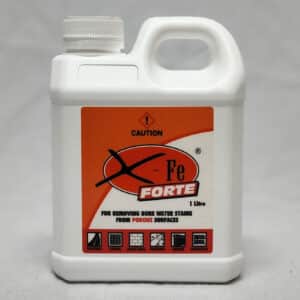
X-Fe Forte is formulated for porous surfaces. It breaks down iron oxide staining on driveways, retaining walls, concrete tanks, and paved areas without damaging the substrate. For non-porous surfaces such as PVC irrigation pipe, poly tanks, steel troughs, and galvanised fittings, X-Fe provides targeted rust stain removal.
Both products are biodegradable and safe around stock and established vegetation when applied according to instructions. For surfaces with regular bore water exposure — irrigation risers, filter housings, concrete header tanks — periodic treatment prevents stain build-up from becoming a structural or aesthetic problem.
Get Technical Advice for Your Hunter Valley Bore
If you are dealing with iron bacteria, reduced pump output, or iron staining on your Hunter Valley property, the Clearbore team can help. With more than 30 years of experience treating bores across New South Wales — including the Hunter Valley, Central Coast, and New England regions — the advice is specific to your bore conditions and water quality, not a generic prescription.
Contact us to discuss your situation, find your nearest distributor, or download the product Safety Data Sheets. The right treatment programme, started early, is always less costly than a pump replacement.
Frequently Asked Questions
How do I know if my Hunter Valley bore has iron bacteria and not just high iron levels?
High iron without bacterial activity typically produces clear water that turns orange on standing — iron oxidises on contact with air. Iron bacteria produce a reddish-brown slime or film, a sulphur or musty odour, and deposits that cling to surfaces rather than settling. Slime inside your header tank or filter housing is a strong indicator. A laboratory water test can confirm bacteria by measuring biofilm activity alongside dissolved iron concentration.
How long does Clearbore treatment take and can I do it myself?
A standard treatment typically requires 4–8 hours of contact time. This is followed by a pump-to-waste period until the bore runs clear, which can take 1–3 hours depending on bore condition and yield. Many bore owners carry out routine maintenance treatments themselves following the product instructions. For bores untreated for several years, or where pump output has dropped significantly, engaging a licensed bore driller to assist with surge pumping and post-treatment assessment is advisable.
Will Clearbore harm my vines, pasture, or livestock?
Clearbore is biodegradable and formulated for safe use in agricultural settings. When pump-to-waste discharge is managed away from waterways and allowed to disperse into soil, there is no risk to established pasture or vegetation. Livestock should not have direct access to pump-to-waste discharge during treatment. Your local Clearbore distributor can provide application guidance specific to your property.
How often should I treat my Hunter Valley bore?
For agricultural bores operating through a full irrigation season, an annual maintenance treatment is typically the most cost-effective schedule. Residential or low-use bores generally require treatment every two years. Monitoring water quality and pump performance is the most reliable guide. Properties along the Hunter River alluvial corridor — where iron loads are particularly high — may benefit from more frequent maintenance.
My bore water is staining the concrete around my tank and irrigation risers. What product should I use?
X-Fe Forte is designed for porous surfaces including concrete, sandstone, brick, and pavers. Apply to the stained area, allow the recommended contact time, then rinse thoroughly. For non-porous surfaces such as PVC pipe, poly tanks, or steel fittings, use X-Fe. Both products are available through Clearbore distributors.