

Bore water stains are caused by iron deposits that oxidise when exposed to air, leaving stubborn rust-coloured marks on driveways, fences, and walls. The key to effective removal is using the right product for your surface type—specialised removers for porous surfaces like concrete work differently than those for non-porous materials like glass or steel.
If you rely on bore water for irrigation, you’ve likely noticed those telltale orange and brown stains appearing on your driveway, pavers, fencing, or brickwork. These marks aren’t just unsightly—they’re a sign that iron-rich groundwater is leaving deposits on your property. Understanding what causes bore water stains and how to remove them properly can save you time, money, and frustration.
What Causes Bore Water Stains?
Bore water stains form when iron dissolved in groundwater comes into contact with oxygen. Unlike treated town water, bore water often contains elevated levels of dissolved iron and manganese drawn from underground aquifers. When this water is pumped to the surface and used for irrigation, the iron remains invisible—until it hits the air.

The moment bore water sprays onto your driveway, fence, or garden bed, oxidation begins. The dissolved iron transforms into iron oxide, commonly known as rust. As the water evaporates, it leaves behind these rust-coloured deposits that bond to the surface. Over time, repeated watering cycles build up layers of iron staining that become increasingly difficult to shift.
In many Australian regions—particularly in Queensland, Western Australia, the Northern Territory, and parts of New South Wales—groundwater naturally contains higher iron concentrations. This makes bore water staining a widespread issue for rural properties, farms, councils, and residential bore owners across the country.
Why Bore Water Stains Are Different
Not all water stains are created equal. Bore water stains differ significantly from regular hard water marks or calcium deposits. The iron content in bore water creates a chemical bond with many surfaces, especially porous materials like concrete, brick, and sandstone. This is why a quick rinse or standard cleaner often fails to make any difference.
Additionally, bore water may contain iron-related bacteria that contribute to the staining problem. These naturally occurring microorganisms feed on dissolved iron and create a biofilm—a slimy layer that can appear on irrigation equipment, pipes, and even on surfaces where bore water regularly splashes. When this biofilm dries, it intensifies the rust-coloured appearance and makes stains even more stubborn.
Understanding this difference is crucial because it explains why you need specialised products rather than generic cleaners. The goal isn’t just to scrub away surface dirt—you need to dissolve the iron precipitate that has bonded to the material.
Choosing the Right Stain Remover for Your Surface
The most important decision when tackling bore water stains is selecting a product designed for your specific surface type. This is where many people go wrong. Using the incorrect product can be ineffective at best and potentially damaging at worst.
Surfaces fall into two main categories: porous and non-porous. Porous surfaces include concrete, pavers, brick, render, natural stone, and sandstone. These materials have tiny holes and channels that allow iron deposits to penetrate below the surface. Non-porous surfaces include glass, stainless steel, PVC, polypropylene, glazed tiles, and painted metal. These materials have a sealed surface where stains sit on top rather than soaking in.

For porous surfaces, you need a stain remover that can penetrate the material and dissolve iron deposits from within. Products formulated for porous surfaces typically have a different chemical composition that allows them to work deeper into the substrate. For non-porous surfaces, a surface-acting formula is more appropriate and effective, as the stain hasn’t penetrated and requires a different approach.
Choosing a biodegradable, Australian-made product ensures you’re using a solution that’s been developed specifically for local water conditions and environmental standards. Look for specialised iron stain removers that clearly state their intended surface type and avoid generic “rust removers” that may contain harsh acids unsuitable for outdoor applications.
Step-by-Step Stain Removal Process
Successfully removing bore water stains requires more than just spraying and wiping. Following a methodical approach ensures better results and protects your surfaces from damage.
Start by identifying the surface type and selecting the appropriate stain remover. Before applying any product to a large area, test it on a small, inconspicuous section to ensure compatibility. This step is especially important for painted, sealed, or delicate surfaces.
Prepare the area by removing any loose debris, dirt, or organic matter. A quick sweep or rinse helps the stain remover make direct contact with the iron deposits. Ensure the surface is damp but not saturated—this helps the product spread evenly and prevents it from drying too quickly.
Apply the stain remover according to the product instructions. For most formulations, this means spraying or brushing the solution generously over the stained area. Make sure you achieve complete coverage, as missed spots will remain discoloured. Allow the product to dwell on the surface for the recommended time, typically between five and fifteen minutes. This dwell time is critical—it allows the active ingredients to break down the iron oxide bonds.
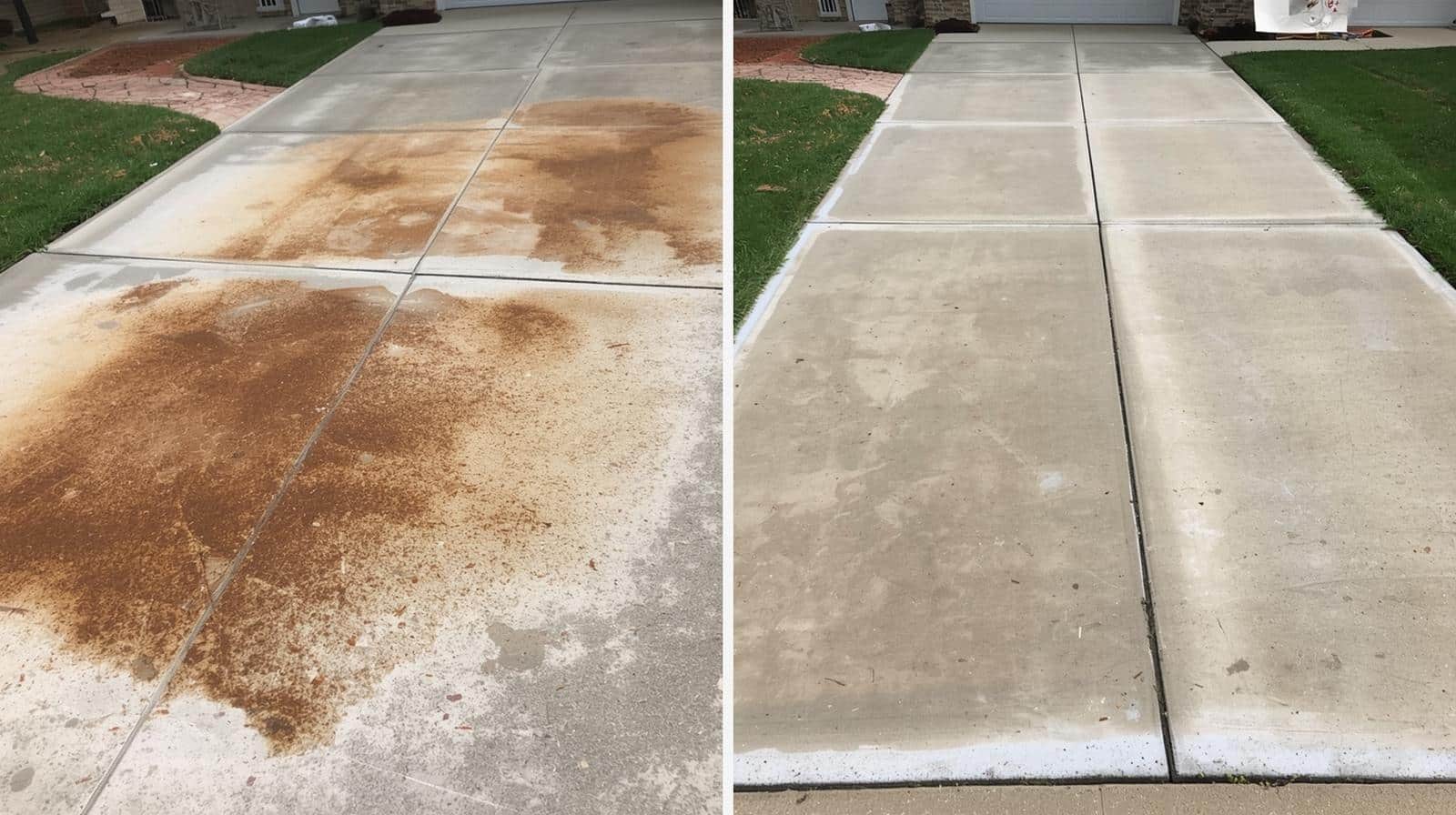
During the dwell period, you may notice the stain changing colour or the solution foaming slightly. This indicates the chemical reaction is working. For stubborn or heavily built-up stains, gentle agitation with a soft brush can help, but avoid aggressive scrubbing that might damage the surface.
Rinse the area thoroughly with clean water. For best results, use a hose or pressure washer to flush away all dissolved iron and product residue. Incomplete rinsing can leave behind a film that may attract new staining. Inspect the area once it’s dry—if any staining remains, a second application may be necessary for complete removal.
Common Mistakes to Avoid
Even with the right product, several common errors can compromise your results. One frequent mistake is using too much pressure or abrasive scrubbing. While it’s tempting to attack stubborn stains with force, this approach can damage surfaces—particularly softer materials like sandstone or render—without actually removing the iron that’s bonded below the surface.
Another error is insufficient dwell time. Rushing the process by rinsing too soon prevents the stain remover from fully dissolving the iron deposits. Patience during this stage makes a significant difference in the final outcome.
Using the wrong product for your surface type is perhaps the most common mistake. A formula designed for non-porous surfaces won’t penetrate concrete effectively, while a porous-surface product may be unnecessarily aggressive on glass or steel. Always verify that your chosen product matches your surface material.
Failing to address the source of the staining is a longer-term mistake. If you continue irrigating with untreated bore water in the same pattern, stains will simply reappear. Consider adjusting sprinkler angles, installation times, or flow rates to minimise overspray onto stain-prone surfaces.
Prevention: Stopping Stains Before They Start
While effective stain removal is important, prevention is always more efficient than repeated cleaning. Several strategies can significantly reduce bore water staining on your property.
Installing a filtration system on your bore water supply is the most comprehensive solution. Iron filters remove dissolved iron before it reaches your irrigation system, preventing oxidation and staining at the source. While this approach requires an initial investment, it eliminates ongoing stain removal efforts and protects your entire reticulation system from iron buildup.
Adjusting your irrigation schedule can also help. Watering during cooler parts of the day reduces evaporation rates, meaning less concentrated iron deposits are left behind. Additionally, ensuring sprinklers are properly aimed away from buildings, fences, and paved areas prevents unnecessary staining on these surfaces.
Applying protective sealants to porous surfaces creates a barrier that makes future staining easier to remove. Sealed concrete, pavers, and brickwork are less susceptible to iron penetration, though sealants do require periodic reapplication to maintain effectiveness.
Regular maintenance of your bore and pump system is another preventive measure. Iron-related bacteria and biofilm buildup within the bore itself can increase iron concentration in the water being pumped. Periodic bore cleaning helps maintain water quality and reduces the iron load in your irrigation water.
When to Seek Professional Advice
While many bore water stains can be successfully removed with the right products and techniques, some situations benefit from professional guidance. If you’re dealing with extensive staining across large areas, valuable surfaces, or materials you’re uncertain about, consulting with a water treatment specialist or experienced tradesperson can prevent costly mistakes.
Properties with persistent staining despite regular cleaning may have underlying bore water quality issues that require assessment. Water testing can reveal iron concentrations, pH levels, and the presence of iron bacteria, all of which influence both staining and the effectiveness of treatment methods.
For commercial properties, councils, or agricultural operations where appearance and efficiency are critical, professional advice on filtration systems, bore maintenance schedules, and comprehensive stain management strategies delivers long-term value.
Maintaining Results Long-Term
Once you’ve successfully removed bore water stains, maintaining clean surfaces requires an ongoing approach. Establish a regular inspection routine to catch new staining early, when it’s easiest to address. Light staining responds much better to treatment than heavy buildup that’s been accumulating for months or years.

Keep your chosen stain remover on hand for spot treatments as needed. Quick action on fresh stains prevents them from setting and becoming more difficult to remove later. Consider scheduling periodic preventive treatments in high-risk areas, even before visible staining appears.
Continue monitoring your bore water quality and irrigation system performance. Changes in water colour, flow rates, or pump efficiency can indicate developing iron bacteria issues that will eventually lead to increased staining. Addressing these problems at the source protects both your bore system and your property surfaces.
Take Control of Bore Water Staining Today
Bore water stains don’t have to be a permanent feature of your property. With the right understanding of what causes these marks, appropriate product selection for your specific surfaces, and a systematic approach to removal and prevention, you can restore and maintain clean, stain-free outdoor areas.
Whether you’re managing a rural property, maintaining council facilities, or keeping your home’s exterior looking its best, effective bore water stain management is achievable. By combining proper stain removal techniques with preventive strategies, you’ll spend less time fighting stubborn marks and more time enjoying your property.
FREQUENTLY ASKED QUESTIONS
How long does it take to remove bore water stains?
Most bore water stains can be removed in 15 to 30 minutes, including application, dwell time, and rinsing. Light stains on glass or steel may clear in five minutes, while heavy buildup on concrete might need multiple treatments. The key is allowing proper dwell time for the product to dissolve iron deposits.
Can I use regular rust remover on bore water stains?
Regular rust removers aren’t formulated for bore water staining and may damage surfaces or prove ineffective. Bore water stains contain iron oxide and biofilm from iron bacteria, requiring specialised biodegradable products designed specifically for outdoor surfaces and bore water conditions.
Will bore water stains come back after removal?
Yes, if you continue using untreated bore water in the same irrigation pattern. To prevent recurrence, install iron filtration, adjust sprinkler angles away from stain-prone surfaces, apply protective sealants to porous materials, or maintain a regular light cleaning schedule before heavy buildup occurs.
Are bore water stain removers safe for plants and lawns?
Quality biodegradable stain removers designed for outdoor use are safe for surrounding vegetation when used as directed. Rinse treated areas thoroughly and avoid concentrated product runoff into garden beds. Check the product’s safety data sheet and follow application guidelines to protect plants and pets.
What’s the difference between treating porous and non-porous surfaces?
Porous surfaces like concrete and brick have channels that let iron penetrate deep, requiring products that work below the surface. Non-porous surfaces like glass and steel trap stains on top, needing surface-acting formulas. Using the wrong product type can be ineffective or damaging.