
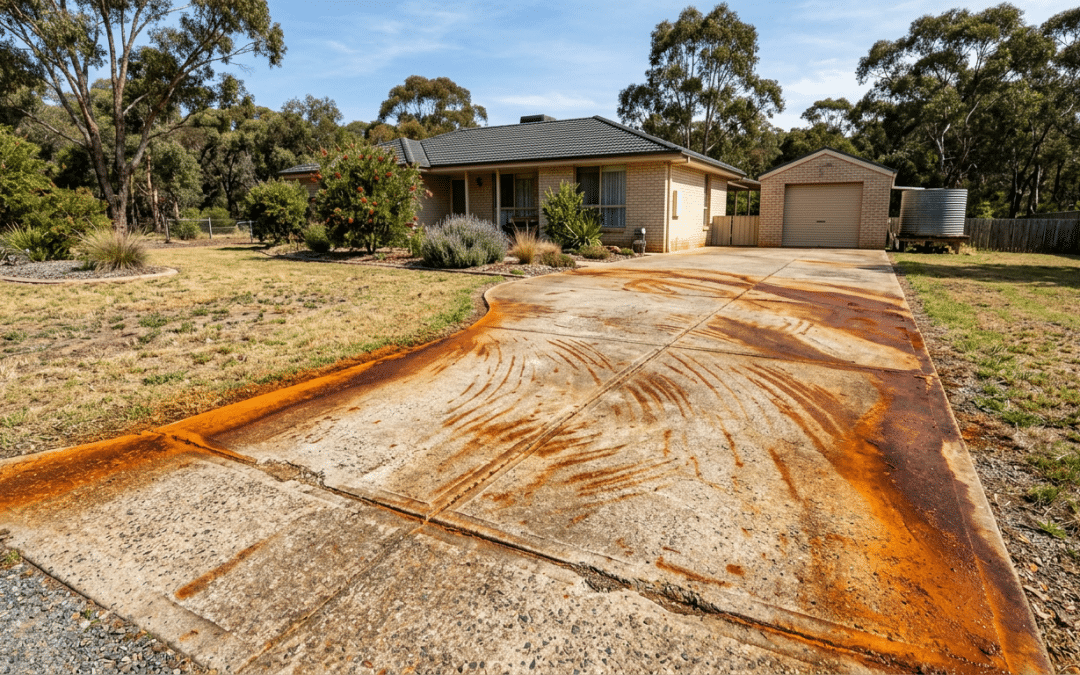
Bore water stains form when dissolved iron in groundwater deposits onto surfaces as rust-coloured residue. Treating the stain and addressing the source together delivers the best and longest-lasting result.
What Causes Bore Water Stains?
Many Australian properties that use bore water for irrigation share the same frustrating experience. Orange and rust-coloured marks appear on paths, fences, brickwork, and driveways. They return season after season, no matter how often you clean them. Understanding why that happens is the first step to fixing the problem for good.
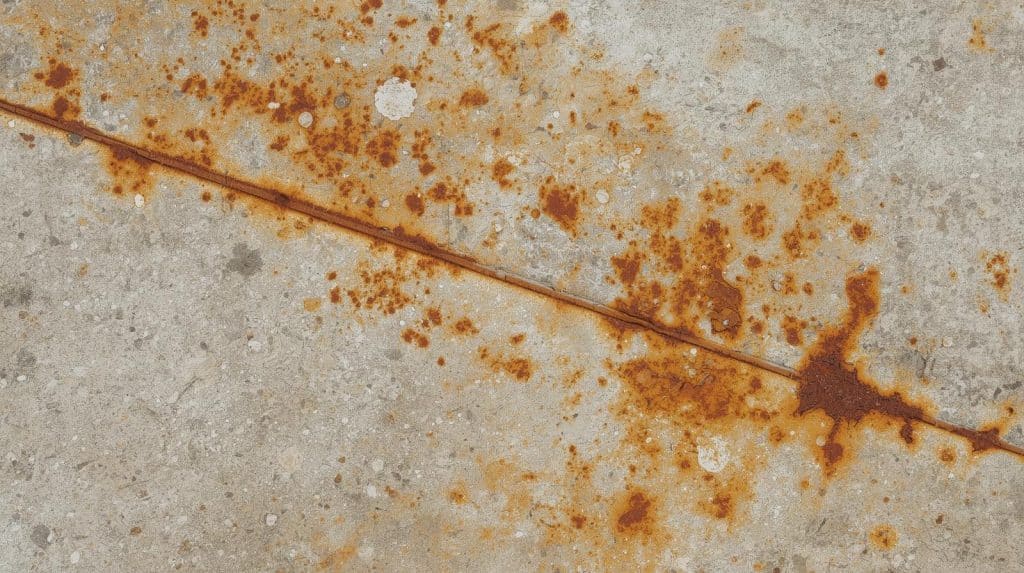
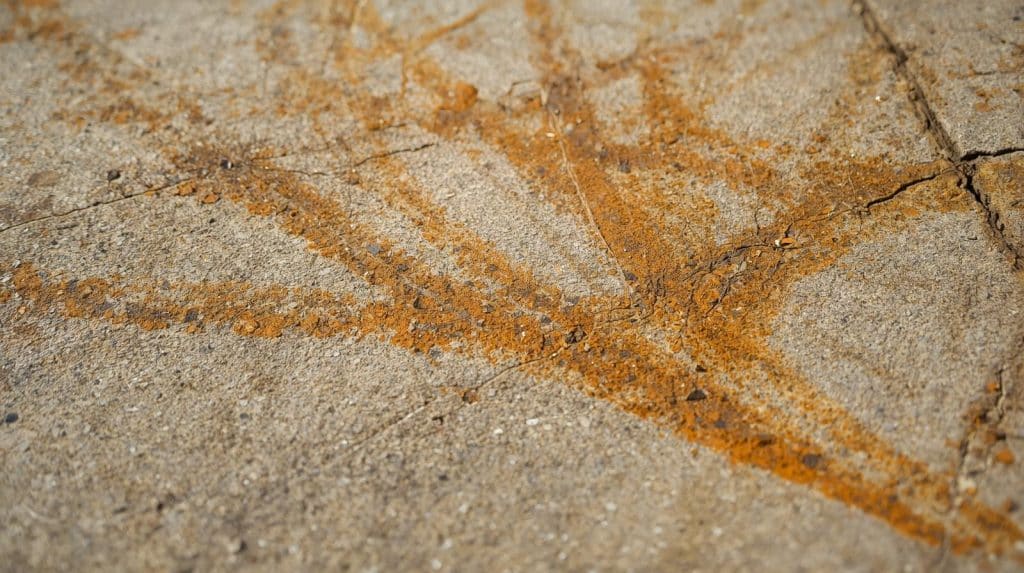
Bore water stains form when dissolved iron in groundwater contacts oxygen. As bore water hits a surface and evaporates, the iron oxidises. It leaves behind a reddish-brown residue called iron oxide. That residue bonds to the surface progressively over time. The longer it remains, the deeper it sets and the harder it becomes to remove.
Australia’s groundwater carries naturally high iron levels across many regions. Western Australia, Queensland, the Northern Territory, and parts of South Australia and New South Wales are prime examples. Properties that irrigate regularly with bore water accumulate staining quickly throughout the growing season.
Iron oxide staining is a separate problem from iron bacteria, though both share the same source. Unlike iron bacteria, iron oxide simply precipitates from water onto surfaces without any biological activity involved. These two issues often occur at the same time. A bore carrying high iron levels tends to trigger both simultaneously.
For homeowners and property managers, the outcome is the same regardless of cause — persistent orange marks that affect property presentation. Leave them long enough and they bond permanently into surfaces.
Why Timing Matters More Than Most People Realise
Fresh bore water stains are significantly easier to remove than old ones. When iron oxide first deposits on a surface, it sits loosely and responds well to a targeted treatment. As time passes — particularly under the harsh Australian sun — it bonds more deeply into the surface material. What begins as a surface issue gradually becomes a structural one.
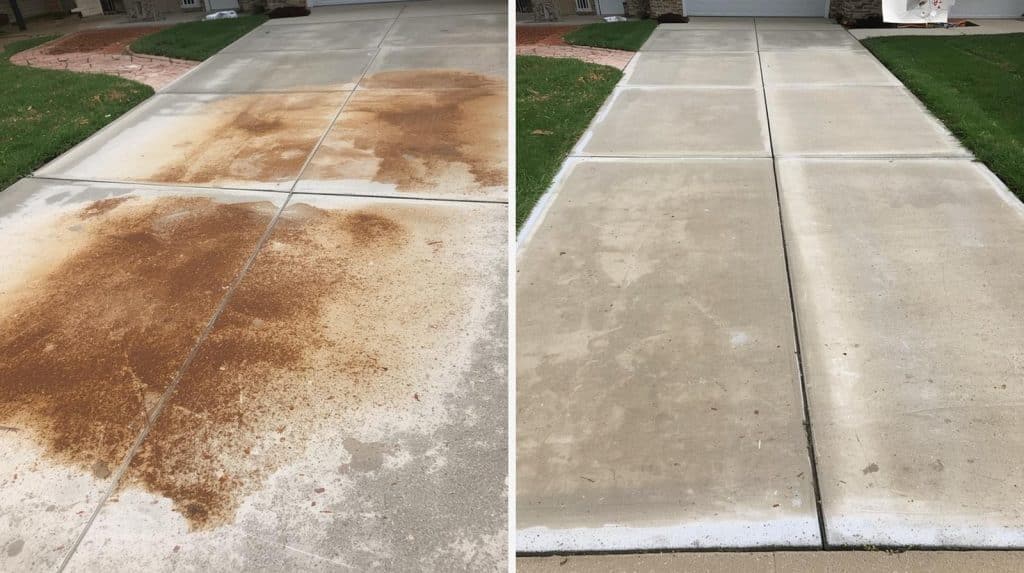
Acting early and treating stains regularly produces far better results than waiting for a full-season buildup. Older staining remains treatable in most cases. It will, however, require more product, more dwell time, and sometimes a professional-grade approach to fully lift. The difference between a fresh stain and a deeply set one is significant. Results improve dramatically when you act within the first season.
A bore that receives regular treatment stays cleaner over time. It also demands far less intensive intervention — and the same holds true for surfaces you treat early and consistently.
The Key Difference: Porous vs Non-Porous Surfaces
The right treatment for bore water stains depends entirely on the surface type. Using the wrong product can damage the material or simply fail to remove the stain.
Non-porous surfaces include stainless steel, glass, glazed tiles, smooth concrete, and PVC. These materials do not absorb iron deposits into their structure. The stain sits on top of the surface layer. A targeted iron-dissolving solution works directly on the deposit without needing to penetrate the material. This makes non-porous surfaces generally more straightforward to treat, even on older, established staining.
Porous surfaces are a different challenge altogether. Brick, unglazed pavers, sandstone, and rough concrete all allow iron oxide to penetrate into the surface pores. A standard cleaner cannot reach those deposits. You need a product that draws iron out from within the material. A surface-only application will not achieve the result.
Getting this distinction right from the start saves time, money, and the frustration of repeat treatments that deliver no improvement.
Choosing the Right Stain Remover for Each Surface
For non-porous surfaces, X-Fe is an Australian-made iron and rust stain remover. It dissolves the iron precipitate causing the stain without damaging the underlying material. X-Fe works across stainless steel, PVC, glass, and smooth concrete. It is biodegradable and free from harsh acids that could corrode or discolour surfaces.
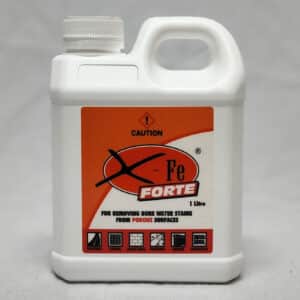
For porous surfaces such as brick, pavers, render, and sandstone, X-Fe Forte is the right choice. Its formula penetrates into the material and dissolves iron deposits from within. X-Fe Forte is also biodegradable and safe to use around gardens and lawns. Both products belong to the Australian-made Clearbore range. The brand has served agriculture, councils, mining, and residential properties for over 30 years.
Before applying either product, always spot-test on an inconspicuous area first. Painted surfaces, natural stone, and aged brickwork can vary in sensitivity, so testing first avoids unwanted outcomes. Apply the product according to label directions and allow adequate dwell time before rinsing. Patience with dwell time makes a notable difference to the final result. This is especially true for staining that has had more than one season to bond.
How to Prevent Bore Water Stains From Returning
Removing existing stains is one part of the solution. Preventing them from building up again is equally important. There are two levels of prevention worth addressing — surface-level and source-level.
At the surface level, reviewing your irrigation setup makes an immediate difference. Direct sprinkler heads away from walls, fences, paths, and driveways. Many properties accumulate their worst staining directly below poorly aimed reticulation heads. A simple coverage adjustment can dramatically reduce the volume of iron-laden water landing on hard surfaces each watering cycle.
Installing a filter on your bore water supply is another effective measure. It reduces the iron load before water reaches your irrigation heads. Even a basic sediment and iron filter can noticeably lower dissolved iron throughout the season. These systems vary in complexity and capacity. Choose one that suits your bore’s iron level and flow rate for the best outcome.
Treat the Source, Not Just the Symptom
Surface treatment alone will not prevent bore water stains from returning if the bore carries a heavy iron load. Dissolved iron and iron bacteria gradually build up inside the bore. That buildup raises the iron concentration in the water your pump delivers. Higher iron concentration means faster staining on surfaces and greater strain on your pump and irrigation equipment.
Regular bore maintenance directly addresses the root cause. Clearbore is an Australian-made granular bore cleaner that dissolves iron deposits and biofilm inside the bore. It reduces iron concentration in the water, improves pump performance, and slows the rate of surface staining considerably. Regular treatment also protects your irrigation infrastructure — sprinkler heads, pipes, and drip emitters that clog progressively as iron deposits accumulate. A consistent treatment schedule costs far less than emergency bore repairs or repeated professional stain removal. This is especially relevant in WA and QLD, where bore water iron levels rank among the highest in the country.
Understanding the link between your bore’s condition and your property’s appearance puts you in control of both problems. For more on what drives iron buildup inside bores, see how iron bacteria develops and what it does.
Take Back Control of Your Property’s Appearance
Bore water stains are persistent — but they are not permanent. Match the right stain remover to your surface type. Adjust your irrigation coverage to reduce contact with hard surfaces. Maintain your bore regularly to keep iron levels low at the source. These three steps together deliver a cleaner property and a more reliable water supply. The Clearbore team is ready to help you find the right solution for your surfaces and your bore. Get in touch today for expert advice tailored to your situation.
Frequently Asked Questions
Why do bore water stains keep coming back after I clean them?
Bore water stains return because the source of dissolved iron — your bore — continues to deliver iron-rich water to the same surfaces. Cleaning the stain removes the visible deposit, but the next watering cycle starts the process again. Treating the bore itself with a regular cleaning program significantly reduces iron concentration in the water and slows the rate of re-staining.
What is the difference between iron oxide stains and iron bacteria stains?
Iron oxide stains form when dissolved iron in bore water oxidises on contact with air and deposits onto surfaces — a purely chemical process. Iron bacteria are microscopic organisms that feed on dissolved iron inside the bore and create a slimy biofilm. Both stem from the same source, but iron oxide causes surface staining while iron bacteria cause internal bore and pump problems. Properties with high iron groundwater often experience both.
Can I use the same stain remover on all surfaces?
No — surface type determines which product to use. Non-porous surfaces such as stainless steel, glass, and smooth concrete respond well to a standard iron stain remover like X-Fe. Porous surfaces like brick, pavers, and render require a penetrating formula such as X-Fe Forte, which is specifically designed to draw iron deposits out from within the material. Using the wrong product reduces effectiveness and may damage the surface.
How long do bore water stains take to become permanent?
No bore water stain is truly permanent, but older stains bond more deeply into the surface material and become significantly harder to remove — especially on porous surfaces exposed to prolonged sun. Acting within the first season gives the best results. Stains left across multiple seasons may need repeated applications or a professional treatment to fully lift.
Does preventing bore water stains require expensive equipment?
Not necessarily. Redirecting irrigation heads away from hard surfaces and fencing is a free and often highly effective starting point. A basic iron filter on your bore water supply can further reduce staining without a large investment. Regular bore maintenance with a granular bore cleaner like Clearbore is another cost-effective step that reduces dissolved iron in your water supply at the source — meaning less staining, less cleanup, and better bore performance overall.