
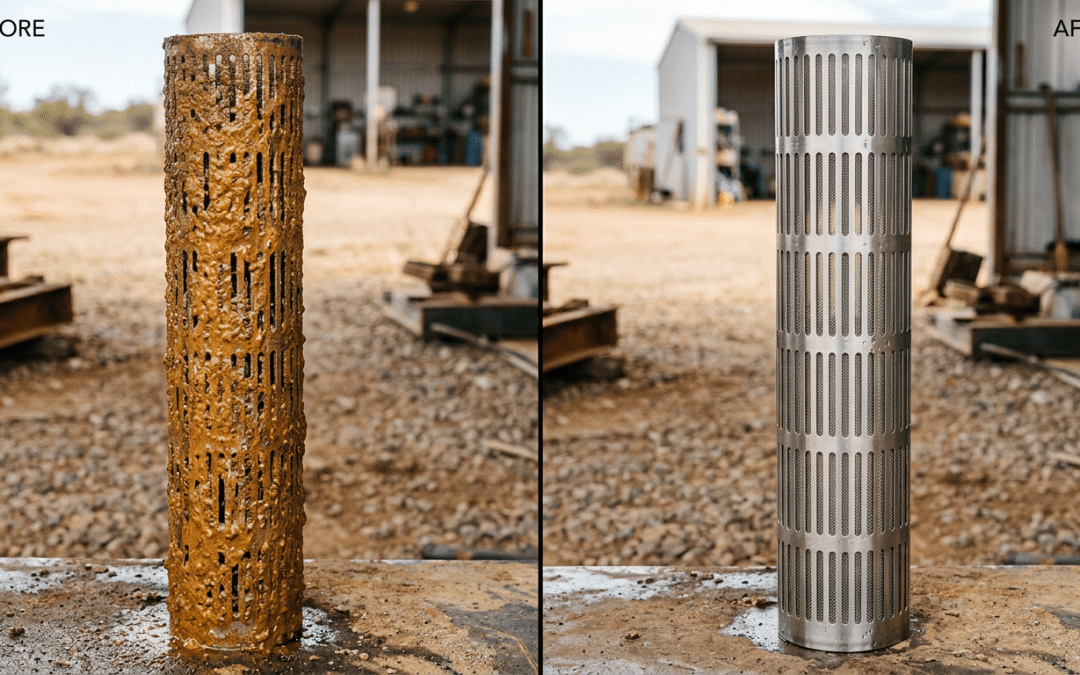
Iron bacteria are naturally occurring microorganisms that feed on dissolved iron in groundwater. They form slimy buildups that clog bores, pumps, and pipes. The right bore cleaner dissolves those buildups and restores your water flow.
What Is Iron Bacteria?
Iron bacteria are microscopic organisms that occur naturally in soil and groundwater right across Australia. Unlike harmful pathogens, they do not pose a direct risk to human health or animal welfare. However, they cause some of the most persistent and costly bore performance problems property owners face.
One important reassurance for homeowners and farmers is that iron bacteria cause no health risk to people, livestock, or wildlife. Their impact is entirely operational and cosmetic. Left unaddressed, though, those operational effects can become seriously expensive and disruptive.
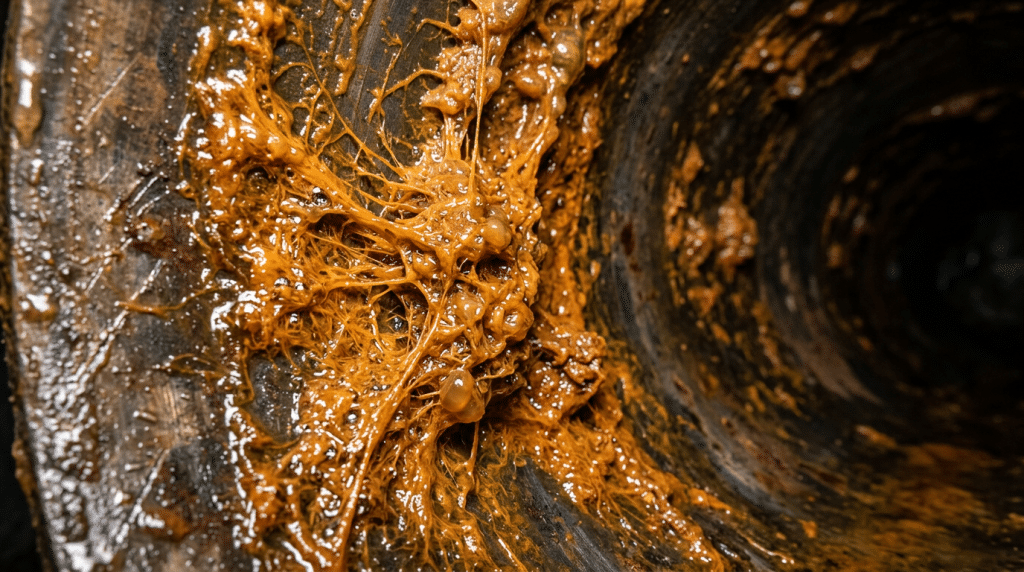
These bacteria survive by feeding on dissolved iron in groundwater. As they do so, they produce a thick, rust-coloured slime called a biofilm. This biofilm coats the inside of bores, pumps, pipes, and irrigation equipment. Over time, it hardens into tough encrustations that progressively restrict water flow and reduce bore yield.
Iron bacteria also thrive when groundwater rises into the bore column. As the water rises, it picks up oxygen from the surrounding environment. That oxygen acts as a fertiliser for bacterial growth, causing populations to multiply rapidly. Under the right conditions, bacterial numbers can increase a thousand times in under three hours. This explains why a well-performing bore can deteriorate surprisingly fast.
It is also worth understanding that iron bacteria and iron oxide are two distinct problems. Bores frequently experience both simultaneously. Iron oxide deposits form when dissolved iron precipitates and hardens without any bacterial involvement. Iron bacteria, on the other hand, actively generate the sticky biofilm that traps particles and accelerates blockages. Treating both issues together is therefore key to a thorough result.
Why Iron Bacteria Is Such a Problem for Bores
The impact of iron bacteria on a bore goes well beyond water discolouration. The orange staining is certainly unpleasant. The more serious consequences, however, relate to infrastructure damage and water supply reliability.
As biofilm gradually accumulates, it narrows the bore screen and reduces the pump’s operating efficiency. It also creates heat-trapping resistance around the pump motor. That increased heat puts the motor at genuine risk of burnout. Because biofilm is sticky, it captures fine particles that would otherwise pass through — accelerating blockages even further.
In agricultural and irrigation settings, the consequences can be particularly costly. Blocked drip nozzles, reduced flow at critical growing periods, and higher energy bills are all common results. For councils, parks, golf courses, and commercial facilities, unplanned system failures cause significant operational disruption and financial cost.
In more severe cases, untreated iron bacteria leads to bore abandonment. That outcome is both expensive and entirely preventable with regular maintenance. Treatment does not have to be complicated or disruptive. The right product can often restore a bore to full performance in a matter of hours.
How to Spot the Signs of Iron Bacteria
Catching iron bacteria early gives you the best chance of managing the problem before it becomes severe. Several symptoms point strongly to iron bacteria activity in a bore. The good news is that most of these signs are straightforward to spot without specialist equipment.
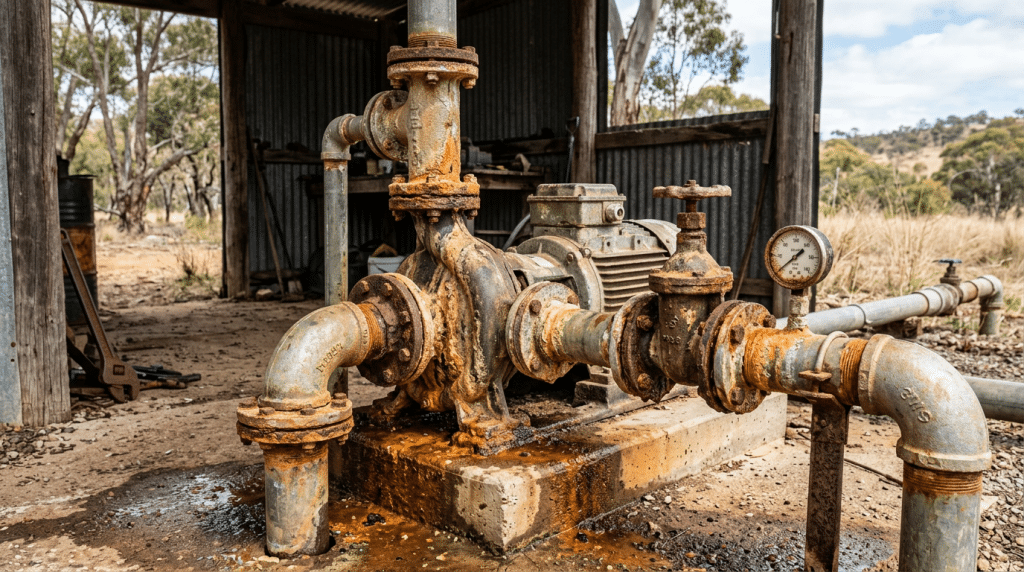
A drop in bore yield or water pressure is often one of the first indicators. Watch for your pump working harder than usual or consuming more power. If the flow rate has declined over time, iron bacteria may well be the underlying cause. Discoloured water — typically brown, orange, or rust-tinted — is another clear sign, along with earthy or metallic odours.
You might also notice reddish-brown staining on surfaces that bore water regularly contacts. This includes toilet cisterns, header tanks, and concrete paths. In still surface water, iron bacteria can form a thin, rainbow-like film. It closely resembles an oil spill. The simplest way to tell them apart is to disturb the surface with a stick. An oil film will reform and stick together. An iron bacteria film will crack apart and stay separated.
If any of these signs are present, have a professional assess your bore before the problem worsens. The same applies if the bore has not had a service in some time.
How Bore Cleaners Treat Iron Bacteria
Treating iron bacteria effectively calls for a product that can penetrate and dissolve both the biofilm and hardened iron deposits. It must also avoid damaging the bore casing, pump, or the surrounding environment.
Granular bore cleaners work by dispersing a chemical treatment through the water column. The treatment makes direct contact with the biofilm, iron deposits, and bacteria throughout the bore. After the treatment works, you flush out the dissolved material to clear the bore screen and restore normal flow. The treatment reaches the entire column rather than just the surface. This matters because iron bacteria and biofouling concentrate most severely in the upper bore screen and around the pump inlet.
Choosing the Right Bore Cleaner
Not every bore cleaner delivers the same results, and choosing the right one matters greatly. A quality product must be biodegradable and free from harsh chemicals such as hydrochloric acid or copper-based solutions. It should also be safe for bores connected to irrigation systems and livestock watering points.
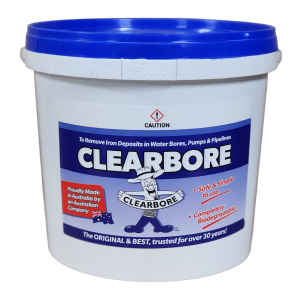
Clearbore is an Australian-made granular bore cleaner. It has proven its reliability across agriculture, mining, councils, and residential properties for more than 30 years. It dissolves biofilm and iron encrustations without requiring pump removal. Every container also comes with a test liquid. This tells you exactly when the bore water is ready to use again.
Bore water iron and rust staining on surfaces is another common problem. For these cases, dedicated stain remover products form part of the range. X-Fe targets non-porous surfaces such as stainless steel, PVC, and smooth concrete. X-Fe Forte works on porous surfaces including pavers, brickwork, and render. Matching the product to the surface type makes a meaningful difference to the outcome.
Why Regular Treatment Matters for Australian Properties
Australia’s groundwater is notably iron-rich across many regions. This includes Queensland, Western Australia, the Northern Territory, and parts of South Australia and New South Wales. As a result, iron bacteria is a widespread and recurring challenge for bore-dependent properties throughout the country.
For farmers, council maintenance teams, mining operators, and homeowners who rely on bore water, a reliable treatment approach is essential. Regular bore cleaning is considerably more cost-effective than emergency pump repair or bore replacement. A proactive maintenance schedule keeps pumping costs down and extends bore life significantly. It also prevents unexpected failure at a critical time. Property owners across Australia have relied on Clearbore for more than 30 years. The reason is simple: it works.
Understanding how iron bacteria develops and what it does helps property owners across Australia take action early. That knowledge keeps water supplies reliable, consistent, and cost-efficient for the long term.
Ready to Get Your Bore Running Clean Again?
If your bore is showing signs of iron bacteria, act sooner rather than later. Waiting only makes the problem harder and more expensive to fix. Clearbore is Australia’s original and most trusted bore cleaning solution — biodegradable, Australian-made, and proven across thousands of properties nationwide. The Clearbore team can help with dosing guidance, product selection, or any questions about your specific bore setup. Do not wait until the bore fails — get in touch today.
Frequently Asked Questions
Is iron bacteria harmful to drink?
Iron bacteria are not harmful to humans, animals, or wildlife and pose no direct health risk. However, their presence in a bore causes unpleasant odours, discoloured water, and serious operational problems — including reduced bore yield, blocked irrigation systems, and pump damage — that get worse the longer they are left untreated.
How do I know if my bore has iron bacteria?
The most common signs are a drop in water pressure or bore yield, brown or rust-coloured water, earthy or metallic odours, and reddish-brown staining on surfaces bore water contacts. In still surface water near your bore, a rainbow-coloured film that cracks when you poke it with a stick is another reliable indicator.
How often should I treat my bore for iron bacteria?
Treatment frequency depends on the iron content of your local groundwater and how quickly biofouling builds up in your system. A proactive maintenance schedule — treating the bore before obvious symptoms appear — is far more effective and cost-efficient than waiting until performance drops or the pump fails.
Can I treat iron bacteria without pulling the pump?
Yes. Granular bore cleaners like Clearbore are specifically designed to treat iron bacteria throughout the bore column without requiring pump removal. The product disperses through the water, dissolves the biofilm and encrustations, and the bore is then flushed to clear the loosened material — all without the cost and disruption of pump extraction.
Does iron bacteria affect all types of bores?
Iron bacteria can affect any bore where dissolved iron is present in the groundwater and oxygen enters the bore column during pumping. Agricultural irrigation bores, council and park bores, mining and industrial bores, and residential water supply bores across iron-rich regions of Australia are all commonly affected.